February is National Embroidery Month!

on Tuesday, February 14, 2012
Research for this wonderful blog here has spat out quite the remarkable result: It is National Embroidery Month!

Embroidery has been used to embellish and beautify things since as early as the times of Cro-Magnon hunters. Already back then, they had figured out that instead of simply just sewing together animal hides to produce clothing, decorative stitches would make their clothes prettier and more individual. There are beautiful examples of Ancient Chinese robes and cloaks colorfully embroidered. Machine-made embroidery was developed and made popular by France and Switzerland in the 19. Century. Of course, embroidery has come a long way since then with continuous progress in technology. Better, faster and more precise machines, improved thread quality and options, and advanced digital design have changed the face of embroidery.

It has since become more of a given than an art form. Embroidery is so incorporated into our everyday life that we don't even perceive it as something special anymore. For this exact reason, February has been declared National Embroidery Month to celebrate the art of layering stitches in order to create design and texture.

What a great time to support local business! Find an embroidery shop in your area, like our very own Orleans Embroidery in Metairie/New Orleans, and purchase wonderful custom-made, individualized clothing, hats, bags and more.


If you need ideas, why not get yourself a custom-embroidered fleece jacket to keep yourself warm, because - coincidentally - February also happens to be National Bird Feeding Month?


Or have cozy blankets embroidered for your kids to celebrate February in its capacity as Sleep Safety Month?


Or how about an embroidered golf towel for your sweetheart or an individualized apron for your bestie, because February is also Creative Romance Month and International Friendship Month!


The possibilities are endless. Let your imagination run wild. Support your local embroiderer. Celebrate National Embroidery Month!

Orleans Embroidery's Embroidery 101

on Monday, February 13, 2012
So you have decided to customize a piece of clothing or accessory with professional embroidery. You have found the perfect embroidery business for your needs (ideally Orleans Embroidery, of course!). But what happens now?

First, you should know as precisely as possible what you want. Where on the piece should the embroidery be? How big do you want it? What font do you want? What do you want the design to look like?

Then, contact your embroiderer for prices and possibilities. Let them know how many pieces you have and give them as much information as you can about your order. The more they know, the easier it will be for them to tell you a realistic price beforehand.

Also, be aware that while the customer may be king, the embroiderer is still the pro. Be open to suggestions and improvements. Accept the limitations of reality. If your embroiderer tells you your design might not work, he is doing so in your best interest. Most embroiderers take great pride in their work and want you to be happy with the outcome. They will be more than happy to work with you, suggest alternatives and invest time into creating the best possible design for you.

Once you have agreed on a design and price, the real work begins: Oftentimes the design has to be digitized and edited several times in specialized computer software and test-sewn to avoid flaws and ensure the highest possible quality. Then the embroidery machines are programmed and each garment is hooped individually. In its two machines, Orleans Embroidery can currently embroider up to 7 pieces simultaneously. Depending on the stitch count and sophistication of the design, one run can take up to one hour. Afterwards, the embroidery is neatened and the backing trimmed. If you chose to have more than one location embroidered on your garment, the process starts all over again for the second/third/etc. location.

Usually orders will be processed on a "first come, first served" basis, so unless your embroiderer is willing to produce your items on a rush order, expect a wait from 2 to 5 working days.

As you can see, your embroiderer is putting a lot of work into making sure that you will end up with a custom designed, high-quality garment. However, whether you are having work uniforms for your business embroidered or wedding favors, or fun gifts for your family and friends, once you see the result you will be convinced that it was worth it!

Orleans Embroidery Web Appearance - - - www.orleansembroidery.com

on Thursday, February 9, 2012
The Orleans Embroidery is expanding and improving its web appearance in 2012! In addition to this blog, you can also visit us on our website http://www.orleansembroidery.com/, or log on to facebook and find us there.

Our website offers an extensive range of products for men and women, from polo shirts to hats and sports items, many of them available from a dainty XS to a powerful 5XL in a variet of colors and styles. You will find all necessary information about all that as well as material and fit, AND be able to place your order right there.

Here on our blog, we offer more background information on our products and services, fashion-related facts and stories, and help on how to choose the right product for you. Check back often, as we will update this blog at least once a week!

If, like most of us, you log on to your facebook account at least once a day, why not also like our facebook page for more updates and the occasional special offers?

We are looking forward to your orders, comments and feedback!

Windbreaker 101 - - - www.orleansembroidery.com

on Monday, February 6, 2012
It is cold, it is rainy, it is windy. For those of us who have to spend time outdoors nevertheless, an essential piece of clothing for this type of weather is the windbreaker. But how do you choose the perfect windbreaker for your needs? What are the most important qualities and features to look out for?

Here is a little Windbreaker 101 to help you in your quest:

Material: The best materials for a windbreaker are durable synthetic fabrics like polyester and nylon taffeta. Generally, they retain body heat very well and keep out wind and rain.

Waterproof: Ideally, the pores of the fabric have been closed, so that no water is allowed to pass through. This quality is rated by the millimeters (MM) of water the garment can hold before it leaks. Sometimes, to make the production process cheaper, the seams and stitch holes of garments are not sealed, which compromises the waterproof integrity.


Wind Resistance: There is a difference between wind resistant and windproof. Generally, to increase comfort when worn, garments will act against or oppose the penetration of wind to a very high degree without being completely windproof. Ideally, windbreakers are also going to have storm flaps - pieces of fabric that cover zippers and other openings to create another barrier against wind and rain.


Breathability: To ensure that you will be comfortable wearing your windbreaker, this is one of the major qualities to look out for. You don't want to feel like you are wrapped in a trash bag that allows absolutely no air circulation. Breathability in a garment is expressed in how many grams of vapor per square meter (G/M2) pass in 24 hours.


With these tips on hand, you should be able to find the perfect windbreaker for your needs. If you are purchasing them for your company, school, team, or even just a family outing, why not customize them with designs, logos or names at an embroidery like Orleans Embroidery in New Orleans?

PANTONE 2012 Color of the Year - - - www.orleansembroidery.com

on Thursday, February 2, 2012
Every year Pantone, the world-renowned authority on color and provider of color systems and leading technology for the selection and accurate communication of color across a variety of industries, selects the color of the upcoming year. 2012's color of the year is Tangerine Tango (color code 17-1463).

The color continues last year's Honeysuckle's endeavor to provide us with energy, to rejuvenate and inspire us. Leatrice Eiseman, executive director of the Pantone Color Institute, describes it like this: “Sophisticated but at the same time dramatic and seductive, Tangerine Tango is an orange with a lot of depth to it. Reminiscent of the radiant shadings of a sunset, [it] marries the vivaciousness and adrenaline rush of red with the friendliness and warmth of yellow, to form a high-visibility, magnetic hue that emanates heat and energy.”

One of Tangerino Tango's most outstanding advantages is that it fits in with every season, style and age. It makes for a great accent color - be it as a pillow on a couch, an exciting dash of color in a bouquet of flowers, or a scarf, tie, purse or shoe in an outfit.

And to add a personal touch to this year's color of the year, why not visit http://www.orleansembroidery.com/ for a variety of custom embroidered products in Tangerine, like visors, shirts or jerseys:


Cultural Awareness & Custom Design - - - www.orleansembroidery.com

on Monday, January 30, 2012
Not only just one, but several companies have been in the news recently for their culturally insensitive products that sparked discussions all across the nation.

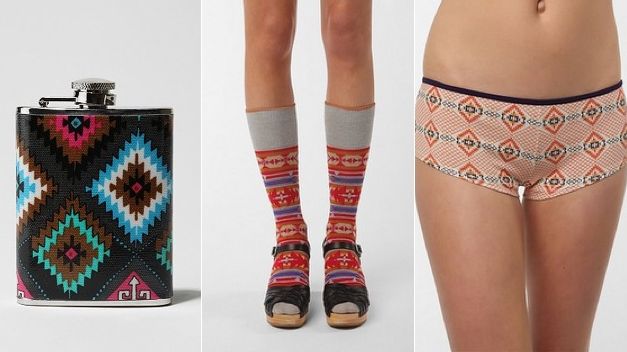
Last year, Urban Outfitters published a line of "Navajo" products, inlcuding items as inappropriate as underwear and flasks with "Native American" designs. After the products hit the shelves, many customers were upset with how the company "has taken Indigenous life ways and artistic expressions and trivialized and sexualized them for the sake of corporate profit." Even worse, the Navajo Nation had its Department of Justice sent a cease-and-desist letter to stop Urban Outfitters from selling any more "Navajo" products.

The items are still available, however, Urban Outfitters has since had to pull the names, which, in addition to being culturally offensive, turned out to be a violation of the Federal Trade Commission Act and Federal Indian Arts and Crafts Act, which states that “It is illegal to [...] sell any art or craft product in a manner that falsely suggests it is [...] the product of a particular Indian or Indian Tribe or Indian arts and crafts organization, resident within the United States.”


Forever 21 committed a similar, yet more debatable, faux-pas: the Oriental Girl necklace. Shine from Yahoo Canada calls the necklace "odd and offensive" and says "Lumping all Asian people into an archaic, offensive label like that is just plain wrong", while others can find nothing offensive about it and call the stir an over-reaction.


Brooklyn based jewelry store Bejeweled infuriated customers with their Swastika earrings. But the symbol, standing for Nazi Germany as a mirrored image of the Sanskrit peace and prosperity, divided the public into pro-personal expression and con-racism camps. Even though the shop owner published a statement saying that the earrings were manufactured in India and do face the traditional Buddhist way, she took them off the shelves to end the uproar.


The bottom line is that perhaps especially in this day and age of globalization, people demand a respectful and sensitive approach to cultural identity. The racism of the past should teach us to do better in the future. So if you are planning on going public with a custom design, may it be a clothing line or company logo, printed, embroidered or embossed, be aware of this issue and be considerate to avoid hard feelings, lawsuits and losing customers.

It's Fleece Sweater Weather!

on Thursday, January 26, 2012
It's wintertime and the temperatures are way below most people's comfort zones in many places. Even the astonishingly mild winter in Louisiana, home to Orleans Embroidery, has its cold days that make working, walking and all other outdoor activities a little miserable. So what better way to keep yourself cozy and comfortable in spite of cold, rainy, stormy weather than a fleece sweater?

The choices are ample: big, small, tight, loose, with zipper, without zipper, blue, green, yellow, etc, etc. But there are also differences in the fleece materials themselves:


Regular fleece, also known as Polarfleece, was introduced to the world in the late 1970s and soon gained fame because it's lightweight and warm nature meant a giant improvement in outerwear. Trying to perfect the fabric has led to experimentation with cotton, wool and acrylic. Nowadays, most fleece fabrics are 100% polyester.


Microfleece is made from finer yarn, which gives the fabric a higher density than regular fleece. It is also brushed less, so that the garment is overall softer and warmer.


R-Tek™ Fleece is even softer and more lightweight than microfleece and has a special anti-pill finish to help counteract the formation of those annoying little tangled balls of fibers that you can see on the surface of fabrics as a result of friction or simply after a while of regular wear and tear.

If you own a business and want your employees to wear uniform fleece jackets or simply want to give your own fleece sweater a personal touch, the best way to customize fleece is embroidery. Due to the "fluffy" quality of the fabric, stitching will work better than printing.

So visit http://www.orleansembroidery.com/ to get an offer on customizing your cold weather gear today!